
The National Weather Service issues a winter storm warning for a significant winter weather event including snow, ice, sleet or blowing snow, or a combination of those hazards. Travel will become difficult or impossible in some situations, the weather service says. It issues a winter storm watch when conditions are favorable for a significant winter storm event. Those are two of three winter alert levels that your local National Weather Service office issues based on local criteria. The third is a winter weather advisory, used when snow, blowing snow, ice, sleet, or a combination of those wintry elements is expected but should not be hazardous enough to meet warning criteria. The weather service labels warnings "Take Action!", watches "Be Prepared" and advisories "Be Aware."
Quick answers
- What is the difference between a winter storm watch and a winter storm warning? The National Weather Service issues a watch when conditions are favorable for a significant winter storm event. It issues a warning for a significant winter weather event including snow, ice, sleet or blowing snow, when travel will become difficult or impossible in some situations.
- Which is worse, a watch or a warning? A warning. The National Weather Service labels warnings "Take Action!", watches "Be Prepared" and advisories "Be Aware."
- What is a winter weather advisory? The National Weather Service issues one when snow, blowing snow, ice, sleet, or a combination of these wintry elements is expected but conditions should not be hazardous enough to meet warning criteria. It says to be prepared for winter driving conditions and possible travel difficulties, and to use caution when driving.
- How much snow makes a winter storm warning? There is no single nationwide number. The National Weather Service says each local office issues warnings, watches or advisories based on local criteria, and that the amount of snow that triggers a Winter Storm Warning in the Northern Plains is typically much higher than the amount needed to trigger one in the Southeast.
- What is an ice storm warning? The National Weather Service says Ice Storm Warnings are usually issued for ice accumulation of around 1/4 inch or more. This amount of ice accumulation will make travel dangerous or impossible and likely lead to snapped power lines and falling tree branches, and travel is strongly discouraged.
- What is a blizzard warning? The National Weather Service issues Blizzard Warnings for frequent gusts greater than or equal to 35 mph accompanied by falling and/or blowing snow, frequently reducing visibility to less than 1/4 mile for three hours or more.
Advisory, watch, warning: the three levels
Winter weather alerts come in three levels, and they are not interchangeable.
The National Weather Service says winter weather related warnings, watches and advisories are issued by your local National Weather Service office. Each office knows the local area and will issue them based on local criteria. On its winter alerts page, the weather service groups those products under three labels:
- Warnings, "Take Action!" The most serious level. For winter storms, that includes the Winter Storm Warning, the Ice Storm Warning and the Blizzard Warning, which are spelled out below. Local offices also issue Lake Effect Snow Warnings when widespread or localized lake induced snow squalls or heavy showers are expected to produce significant snowfall accumulation.
- Watches, "Be Prepared." A Winter Storm Watch means conditions are favorable for a significant winter storm event, such as heavy sleet, heavy snow, an ice storm, heavy snow and blowing snow, or a combination of those events.
- Advisories, "Be Aware." A Winter Weather Advisory means snow, blowing snow, ice, sleet, or a combination of these wintry elements is expected, but conditions should not be hazardous enough to meet warning criteria. The weather service says to be prepared for winter driving conditions and possible travel difficulties, and to use caution when driving. Local offices also issue Lake Effect Snow Advisories when lake effect snowfall accumulation remains below warning criteria.
Winter storm watch vs warning
The difference is how sure the forecast is, and how hard the storm is expected to hit.
The National Weather Service says Winter Storm Watches "are issued when conditions are favorable for a significant winter storm event (heavy sleet, heavy snow, ice storm, heavy snow and blowing snow or a combination of events.)" Winter Storm Warnings "are issued for a significant winter weather event including snow, ice, sleet or blowing snow or a combination of these hazards." It also says, "Travel will become difficult or impossible in some situations. Delay your travel plans until conditions improve."
Ready.gov, the federal preparedness site, describes the same products in different words and adds usual timing that the weather service's winter alerts page does not. Ready.gov says a Winter Storm Warning is "issued when hazardous winter weather in the form of heavy snow, heavy freezing rain, or heavy sleet is imminent or occurring," and that "Winter Storm Warnings are usually issued 12 to 24 hours before the event is expected to begin." It says a Winter Storm Watch "alerts the public to the possibility of a blizzard, heavy snow, heavy freezing rain, or heavy sleet," and that "Winter Storm Watches are usually issued 12 to 48 hours before the beginning of a Winter Storm." For a Winter Weather Advisory, Ready.gov says it is "issued for accumulations of snow, freezing rain, freezing drizzle, and sleet which will cause significant inconveniences and, if caution is not exercised, could lead to life-threatening situations."
Those are two official descriptions, not one blended rule. The National Weather Service is the agency that issues the alerts, so its wording is the issuer's definition. Ready.gov's 12 to 24 hour and 12 to 48 hour figures are Ready.gov's own usual-timing statements. They do not appear on the weather service's winter warnings page.
Ready.gov also says that if you are under a winter storm warning, find shelter right away.
Ice storm and blizzard warnings
Some winter warnings are issued for a specific hazard, not for a general winter storm.
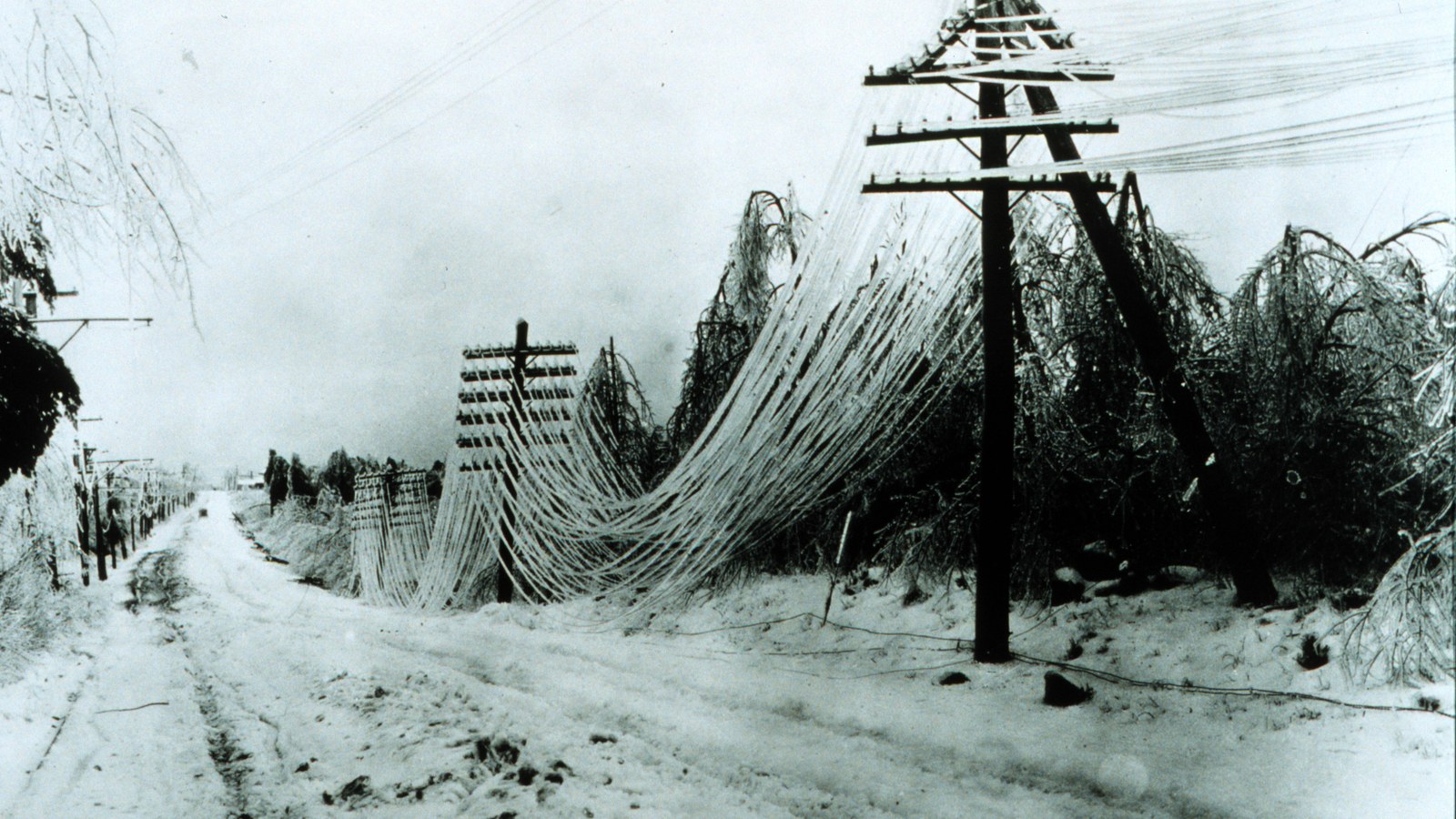
The National Weather Service says Ice Storm Warnings "are usually issued for ice accumulation of around 1/4 inch or more." It says this amount of ice accumulation "will make travel dangerous or impossible and likely lead to snapped power lines and falling tree branches," and that "Travel is strongly discouraged."
The weather service defines freezing rain as rain that freezes when it hits the ground, creating a coating of ice on roads, walkways, trees and power lines. It defines sleet as rain that turns to ice pellets before reaching the ground, which also causes moisture on roads to freeze and become slippery.
A Blizzard Warning is a different product. The National Weather Service says Blizzard Warnings "are issued for frequent gusts greater than or equal to 35 mph accompanied by falling and/or blowing snow, frequently reducing visibility to less than 1/4 mile for three hours or more." It says a Blizzard Warning means severe winter weather conditions are expected or occurring. Falling and blowing snow with strong winds and poor visibilities are likely, leading to whiteout conditions making travel extremely difficult. The weather service's instruction is "Do not travel." If you must travel, it says to have a winter survival kit with you, and if you get stranded, stay with your vehicle and wait for help to arrive.
Why the snow amount differs by place
There is no single snow total that makes a winter storm warning everywhere.
The National Weather Service says each local office "knows the local area and will issue Warnings, Watches or Advisories based on local criteria." As an example, it says "the amount of snow that triggers a 'Winter Storm Warning' in the Northern Plains is typically much higher than the amount needed to trigger a 'Winter Storm Warning' in the Southeast."
Because those criteria differ by place, no single inch total applies nationwide. An amount that would draw a warning in one county can be routine in another, and only the local office's criteria decide which alert you get.
Extreme cold alerts
Cold has its own alerts, and the National Weather Service now names them Extreme Cold Warning, Extreme Cold Watch and Cold Weather Advisory.
On its Understanding Cold Weather Alerts page, the weather service says an Extreme Cold Warning, labeled "Take Action!", "is issued when extremely dangerous cold conditions or wind chill values are expected or occurring." If you are in an area with an Extreme Cold Warning, it says to avoid going outside. If you have to go outside, dress in layers, cover exposed skin, and make sure at least one other person knows your whereabouts, then update them when you arrive safely at your destination.
An Extreme Cold Watch, labeled "Be Prepared.", "is issued when extremely dangerous cold conditions or wind chill values are possible, but the occurrence, location, and/or timing is still uncertain." As with a warning, the weather service says to adjust your plans to avoid being outside during the coldest parts of the day, make sure your car has at least half a tank of gas, and update your winter survival kit.
A Cold Weather Advisory, labeled "Be Aware.", "is issued for dangerously cold conditions that are not expected to reach warning criteria." The weather service says to dress appropriately and cover exposed skin when venturing outdoors.
The same page also lists a Freeze Warning, Freeze Watch and Frost Advisory, which are issued for freezing temperatures and frost that threaten crops and plants, not as substitutes for the extreme cold alerts.
How to get ready, including for power outages
Winter storms can cut heat, power and communications, so preparations cover both the storm and a possible outage.
Ready.gov says winter storms create a higher risk of car accidents, hypothermia, frostbite, carbon monoxide poisoning, and heart attacks from overexertion. A winter storm can last a few hours or several days, and it can cut off heat, power and communication services. Older adults, children, sick individuals and pets are at greater risk, Ready.gov says. If you are under a winter storm warning, it says to find shelter right away.
The National Weather Service's own travel advice depends on the product. For a Winter Storm Warning, it says to delay your travel plans until conditions improve. For an Ice Storm Warning, travel is strongly discouraged. For a Blizzard Warning, it says not to travel. Ready.gov also says to stay off roads if at all possible, and if you are trapped in your car, stay inside.
To prepare, Ready.gov says to pay attention to weather reports and warnings, listen for emergency information and alerts, and sign up for your community's warning system. The Emergency Alert System and NOAA Weather Radio also provide emergency alerts. A desktop option is the Midland WR120B NOAA weather radio, which Midland says switches to AA batteries when the power goes out. Ready.gov says to prepare your home to keep out the cold with insulation, caulking and weather stripping, learn how to keep pipes from freezing, and install and test smoke alarms and carbon monoxide detectors with battery backups. Gather supplies in case you need to stay home for several days without power, keeping in mind each person's specific needs, including medication, and the needs of pets. Have extra batteries for radios and flashlights.
For the car, Ready.gov says to create an emergency supply kit that includes jumper cables, sand, a flashlight, warm clothes, blankets, bottled water and non-perishable snacks, and to keep a full tank of gas.
If you have to go outside, Ready.gov says to wear layers of warm clothing and watch for signs of frostbite and hypothermia. It also says to reduce the risk of a heart attack by avoiding overexertion when shoveling snow and walking in the snow.
Carbon monoxide is a separate winter hazard. Ready.gov says to use generators and grills only outdoors and away from windows, and never to heat your home with a gas stovetop or oven, which also raises the risk of fires, burns and damage to the appliance. On its power outages page, it says generators and fuel should always be used outdoors and at least 20 feet away from windows, doors and attached garages, and to install working carbon monoxide detectors on every level of your home. See our CO alarm picks and, if you need safe indoor heat, our indoor-safe heater picks (never run one while you sleep).
If the power does go out, Ready.gov says to keep freezers and refrigerators closed. The refrigerator will keep food cold for about four hours, and a full freezer will keep the temperature for about 48 hours. It says to disconnect appliances and electronics to avoid damage from electrical surges, to have alternate plans for refrigerating medicines or using power-dependent medical devices, and to go to a community location with power if heat or cold is extreme. Check with local officials about heating and cooling locations open near you.
Our power outage kit list for two weeks and guide to what to do during a power outage walk through those steps in more detail. If the outage happens in the cold, see how to stay warm during a winter power outage and the winter storm power outage kit. If you are choosing backup power, we compare portable power stations and generators.
On this site, the climate page collects official storm and outage notes, the monitor shows hazards as they come in, and the methodology page explains which agencies we rely on. When the National Weather Service issues an alert for your area, its word outranks ours.
Sources
- National Weather Service, Winter Weather Warnings, Watches and Advisories
- National Weather Service, Understanding Cold Weather Alerts
- Ready.gov, Winter Weather
- Ready.gov, Power Outages
Sources: National Weather Service (winter and cold weather alerts pages); Ready.gov (winter weather and power outages), checked Nov. 23, 2026. Hero image: NOAA National Weather Service Collection, Image ID wea00955, public domain, cropped to 16:9. Location and date not stated on the NOAA Photo Library record.