
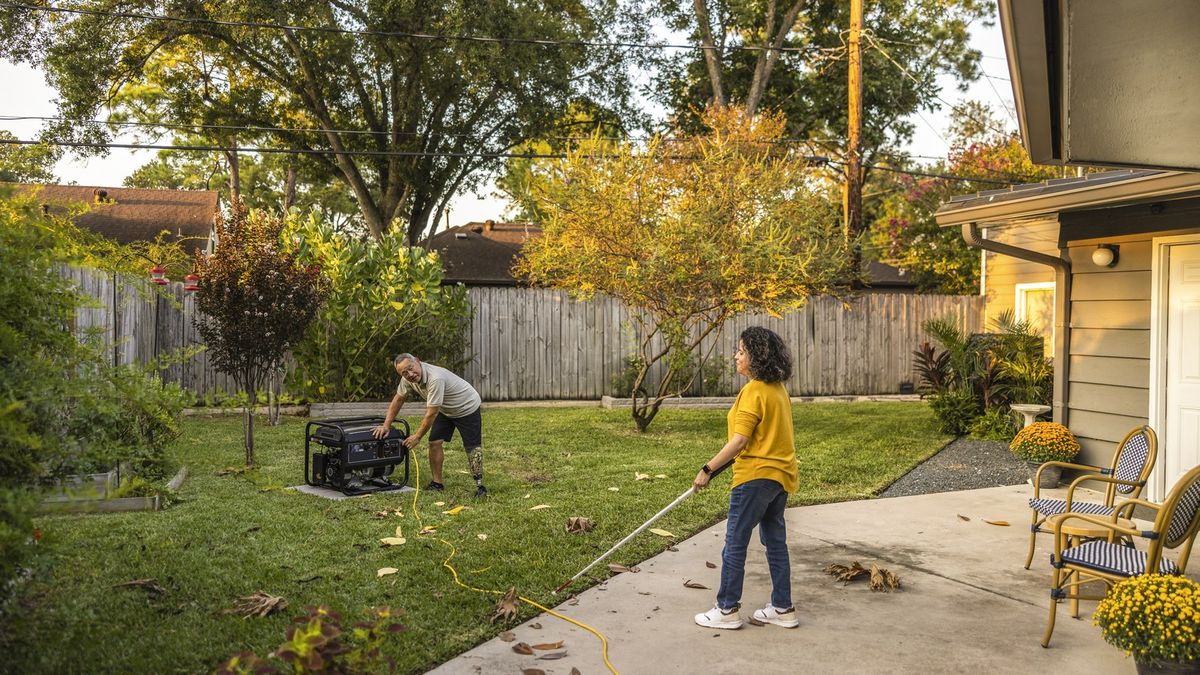
A portable power station is a big rechargeable battery that makes no exhaust, so it can run phones, lights, a CPAP machine or a fridge for a while, indoors. A generator burns fuel and makes far more power for far longer, but it must run outdoors only. The CPSC, in a May 27, 2026 hurricane-season release, says to operate generators "at least 20 feet from homes and buildings," with exhaust directed away from windows, doors and vents. Ready.gov says at least 20 feet from windows, doors and attached garages. The Consumer Product Safety Commission warns that using a generator indoors "CAN KILL YOU IN MINUTES." For a few days of small loads, a power station is the simpler choice. For a long outage with a fridge, freezer and more, a generator, or a power station with solar panels, fits better.
Guidance and gear details checked Tuesday, Oct 27, 2026, at 5:45 PM ET. No prices are listed, because they change often.
Quick answers
- Where can a generator sit? Outdoors only. The CPSC, in a May 27, 2026 hurricane-season release, says at least 20 feet from homes and buildings, with exhaust directed away from windows, doors and vents. Ready.gov says at least 20 feet from windows, doors and attached garages.
- Can I run a generator in the garage? No. The CPSC says never use one inside a home or garage, even if doors and windows are open.
- Why is carbon monoxide so dangerous? It is a colorless, odorless gas that can kill people and pets, Ready.gov says.
- How do I connect a generator to my home? Plug appliances into it with heavy duty outdoor extension cords, or have an electrician install a transfer switch. Never plug it into a wall outlet.
- Is refueling risky? Yes. Turn it off and let it cool first, because fuel spilled on hot engine parts can catch fire.
- Can I use a generator in the rain? Keep it dry. Touching a wet generator or anything plugged into it can shock you, Ready.gov says.
- Is a power station safe indoors? It burns no fuel and makes no exhaust. Look for a model whose maker cites UL 2743, the UL standard for portable power packs.
- Can a power station run my fridge? For a time. Divide the station's watt hours by your fridge's daily use to see how long.
The short answer
Pick by what you need to run and for how long.
A power station is quiet, makes no fumes, and starts with a button. Its limit is stored energy, measured in watt hours. When it runs down, it needs a wall outlet, a car or solar panels to recharge.
A generator's limit is fuel. As long as you can safely refuel it, it keeps going, and it can carry bigger loads. In exchange, it is loud, it needs fuel storage and upkeep, and it carries a real carbon monoxide risk that the rules below exist to prevent.
What a power station does well
A power station shines for phones, laptops, lights, internet routers, medical devices and short fridge runs. It can sit indoors, and many can charge from solar panels.
Pick for most homes. The EcoFlow RIVER 2 Pro is Wirecutter's top portable power station. EcoFlow lists 768 watt hours of storage, 800 watts of pure sine wave AC output (1,600 watts surge), an LFP (lithium iron phosphate) battery rated to keep 80 percent of its capacity after 3,000 cycles, up to 220 watts of solar input, and a weight of about 18.2 pounds. EcoFlow says its user documentation cites UL 2743.
Pick for bigger loads. The EcoFlow DELTA 2 Max is Wirecutter's choice if you need more capacity. EcoFlow lists 2,048 watt hours, six AC outlets with 2,400 watts total (4,800 watts surge), an LFP battery, up to 1,000 watts of solar input across two ports, room for up to two extra batteries, and a weight of about 50 pounds. EcoFlow says its user documentation also cites UL 2743.
What a generator does well
A generator is the better fit when you want to run a fridge, a freezer, a sump pump, a well pump or a window air conditioner for days, and you can store fuel safely.
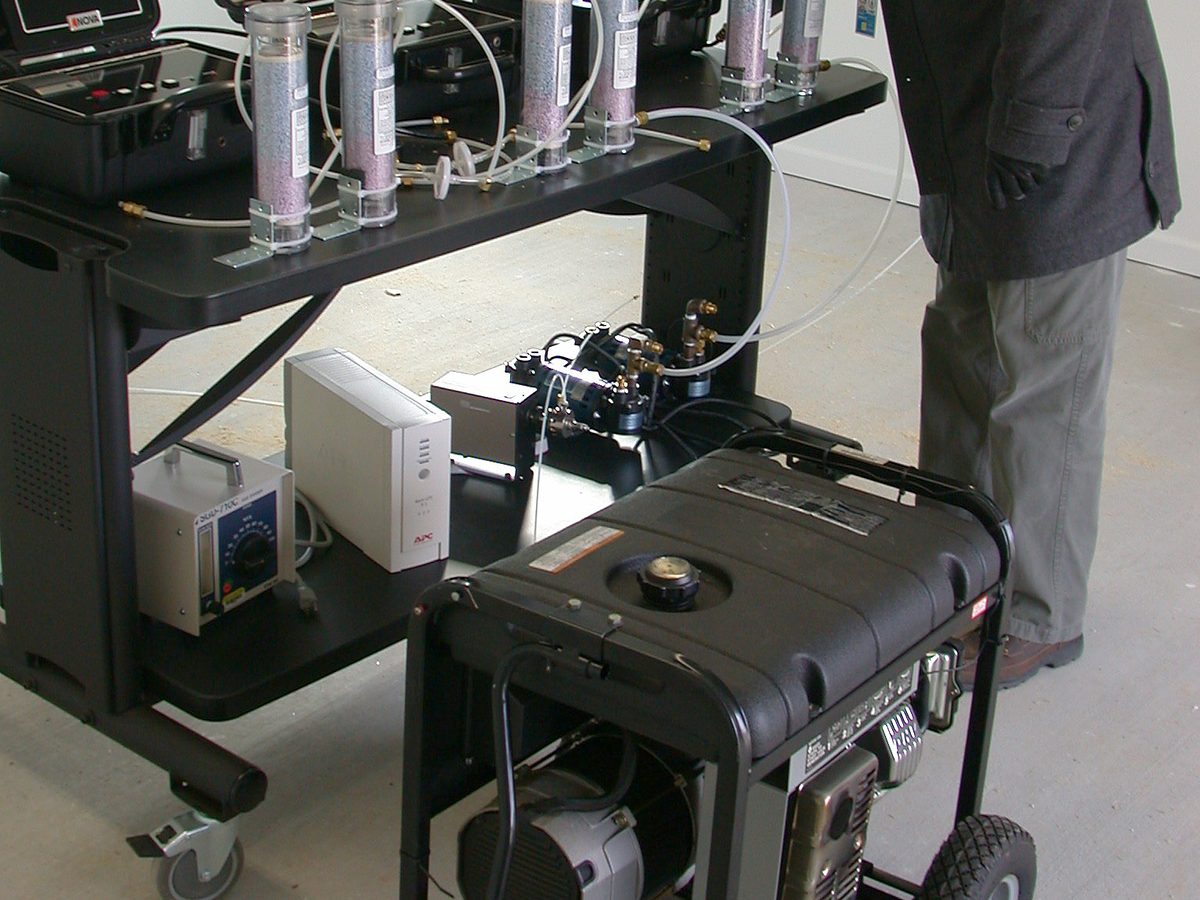
Look for an inverter generator, which makers say produces cleaner power for electronics, with an automatic carbon monoxide shutoff. The CPSC says two voluntary standards address the CO hazard: UL 2201 and ANSI/PGMA G300. Both require a generator to shut itself off when CO builds up around it.
Pick for home backup. The Champion 4500-Watt Electric Start Dual Fuel inverter (model 201319) is a portable inverter generator for home backup. Champion lists 3,500 running watts and 4,500 starting watts on gasoline, and 3,150 running watts on propane; up to 14 hours at 25 percent load on its 2.25 gallon gasoline tank; a 61 dBA noise rating; and electric start. Champion says its CO Shield system monitors carbon monoxide and automatically shuts off the engine if it detects unsafe elevated levels of CO, and that the generator meets ANSI/PGMA G300-2018.
What you actually need to run
Start with a list of the few things that matter most: the fridge, a CPAP machine, phones, lights, the internet router, maybe a furnace blower or a sump pump. Each device's label or manual gives its watts. A power station's AC output must cover everything running at once, and its watt hours decide how long. Our power station size calculator gives one size, and our picks for a CPAP or fridge in an apartment show two stations that can cover a short outage.
The math is simple. Divide the station's watt hours by the device's watts to get rough hours of run time, then expect somewhat less, because turning battery power into household current uses some energy.
For a fridge, use the yearly kilowatt hours on its yellow EnergyGuide label. Divide by 365 to get daily use, then multiply by 1,000 for watt hours. As an example, a fridge labeled 600 kWh a year uses about 1,644 watt hours a day. A 768 watt hour station would run it for a part of a day, while a 2,048 watt hour station would run it for about a day.
For a CPAP, ask the device maker for its power draw, with and without the humidifier, and plan for every night of the outage. Ready.gov says to talk with your medical provider about a power outage plan for any medical device that runs on electricity.
Heat is the hard case. Electric space heaters draw a lot of power, so check a heater's watts against a station's output and watt hours before counting on it. Hardwired equipment, such as a furnace blower or a well pump, can only be connected to a generator through a transfer switch or interlock put in by a licensed electrician.
Generator safety: carbon monoxide and placement
These rules come straight from federal safety agencies.
Outdoors only. "NEVER use inside a home or garage, EVEN IF doors and windows are open," the CPSC's required generator warning says. The CPSC adds that this applies to crawlspaces, sheds and similar areas, "even when using fans or opening doors and windows for ventilation," because deadly CO levels can build quickly and linger for hours after the generator shuts off.
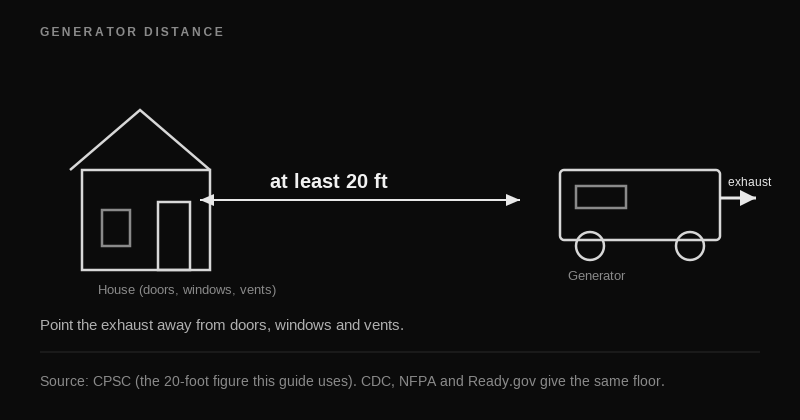
Keep your distance. Ready.gov says generators and fuel "should always be used outdoors and at least 20 feet away from windows, doors and attached garages." The CPSC, in a May 27, 2026 hurricane-season release, says to operate generators outdoors only, "at least 20 feet from homes and buildings," with exhaust directed away from windows, doors and vents. For the official distances side by side, see How Far Should a Generator Be From the House?.
Install CO alarms. Ready.gov says to install working carbon monoxide detectors on every level of your home. The CPSC says to use battery operated alarms, or plug in alarms with battery backup, certified to UL 2034, IAS 6-96 or CSA 6.19.01, and to test the batteries monthly. If you feel sick, dizzy or weak while a generator is running, get to fresh air right away. See our CO alarm picks for generator use.
Never backfeed. "NEVER try to power the house wiring by plugging the generator into a wall outlet, a practice known as 'backfeeding,'" the CPSC says. It calls this "extremely dangerous," a risk of electrocution to utility workers and neighbors served by the same transformer, and says it bypasses some of your home's built in circuit protection. To power house circuits, have a licensed electrician install a transfer switch or interlock. Transfer switches are covered by UL 1008.
Use the right cords. The CPSC says to use heavy duty extension cords made for outdoor use, rated above the total watts of everything plugged into them, long enough to keep the generator far from the house, free of cuts, with all three prongs.
Keep it dry. Ready.gov says, "Touching a wet generator or devices connected to one can cause electrical shock." The CPSC says to run it on a dry surface under an open, canopy like structure, never indoors.
Refuel cold. Turn the generator off and let it cool before refueling, the CPSC says, because gasoline spilled on hot engine parts could ignite. Never store fuel in the home.
Solar charging for longer outages
Solar panels turn a power station into something that can last beyond a few days. Each station's maker lists a maximum solar input in watts, and panels must use a matching connector. The RIVER 2 Pro accepts up to 220 watts of solar, and the DELTA 2 Max up to 1,000 watts across two ports, EcoFlow says.
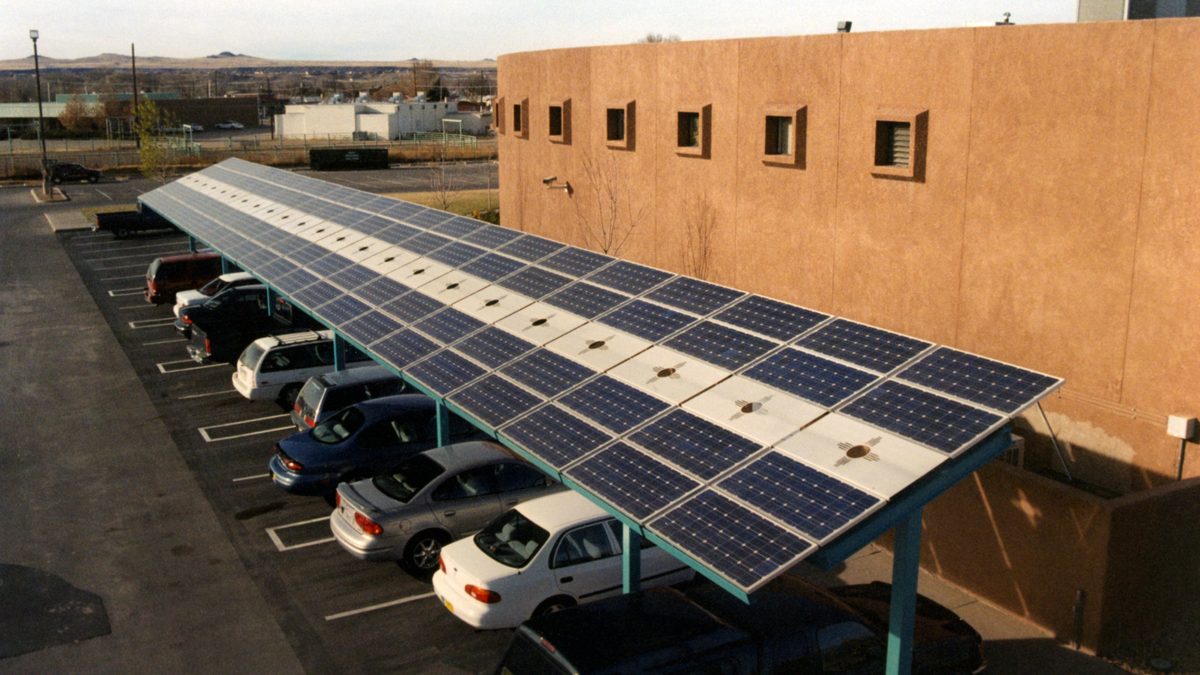
Real output depends on sun, season and panel angle, and cloudy days make far less. Solar works best for steady small loads, such as phones, lights, a router and a CPAP, rather than a fridge plus everything else.
Which one for a few days, 2 weeks, or 90 days
A few days. A power station alone is often enough for phones, lights and medical devices. Keep it charged, and use coolers and a closed fridge door for food.
Two weeks. A larger power station with solar panels can carry the basics. If you need to keep a fridge and freezer running the whole time, an inverter generator with CO shutoff, used outdoors by the rules above, is the steadier option. Our power outage kit list covers the rest of the supplies.
Ninety days. Fuel becomes the problem, and solar becomes the plan. Read our 90 day power outage plan. For live official feeds, see the Doom Signals monitor, and our methodology explains how we choose sources.
Sources
- U.S. Consumer Product Safety Commission, CPSC Warns of Generator, Carbon Monoxide and Fire Hazards Ahead of Hurricane Season (May 27, 2026)
- U.S. Consumer Product Safety Commission, Safety Alert: Portable Generator Hazards
- U.S. Consumer Product Safety Commission, Briefing Package on Portable Generator Voluntary Standards
- Ready.gov, Power Outages
- UL Standards & Engagement, UL 2743, Portable Power Packs, UL 2201 and UL 1008, Transfer Switch Equipment
- Gear specifications are from each maker, as stated in the article, including Champion's 4500W Electric Start Dual Fuel Inverter (201319) product page. Review picks from Wirecutter's guides to portable power stations and portable generators.