
When the power goes out, a CPAP that runs off wall power stops. Plan ahead. Read your manual or call your equipment supplier to find out which battery, DC cord or converter your model can use, and tell your electric company you use a medical device that needs power. ResMed and Philips both point to their own DC power parts for battery use. That advice comes from the Food and Drug Administration (FDA), Ready.gov, ResMed and Philips.
Check with your doctor, your equipment supplier and your machine's manual before buying a battery or inverter. If you depend on your device to keep you alive, FDA says to seek emergency services immediately.
Quick answers
- A CPAP on wall power shuts off in an outage, ResMed says, so the plan has to be made before the lights go out.
- FDA says to read your user instructions or call your distributor or maker to find out if your device can be used with batteries or a generator.
- Tell your electric company and fire department you have a medical device that needs power (FDA), and ask your power provider about a priority restoration list (Ready.gov).
- ResMed sells its own DC/DC converters, and Philips says to use only its own DC power cord and battery adapter cable. Other brands: check your manual.
- Battery and inverter details are model-specific. Don't use one maker's numbers to size power for another machine.
- When power returns, FDA says not to plug in a wet cord or device, and to check your settings, because devices often reset.
For everything else to do when the lights go out, start with our what to do during a power outage checklist.
Before an outage: make a plan with your supplier
The time to sort out CPAP power is before a storm, not during one. Ready.gov says, "If you use medical equipment in your home that requires electricity, talk to your doctor or health care provider about what you may be able to do to keep it running during a power outage. You can also ask your power provider to put you on a list for priority power restoration."
FDA's tips for medical devices in disasters cover the same ground from the device side. FDA says to "Notify your electric company and fire department to let them know you have a medical device that needs power," and to "Read your user instructions or call your distributor or device manufacturer to find out if your device can be used with batteries or a generator." Ready.gov also suggests asking your local energy utility for priority access, because "power restoration is life-sustaining for someone in the home."
FDA also publishes a planning booklet for people whose medical devices need power. Its checklist gives you the questions to bring to your supplier or maker, including:
- "Can my device use batteries in the event of a power outage?"
- "How long will the device last on battery power?"
- "How do I switch operation of my device from battery to electric power?"
- "Can a power surge cause my device to stop working?"
The same booklet lists what not to do once the power is out: don't "Perform an action to the device that I am not sure of," and don't "Assume my device is working correctly." The booklet also asks whether you have a working flashlight with spare batteries, and where it is. Keep your written answers with it.
HHS emPOWER: why it matters, and why you can't sign up
The HHS emPOWER Program is a partnership between the Administration for Strategic Preparedness and Response (ASPR) and the Centers for Medicare and Medicaid Services (CMS). It turns Medicare claims data into maps and counts that help emergency planners find people who rely on electricity-dependent equipment. emPOWER says its data covers "over 4.6 million Medicare beneficiaries, of which over 3 million have a claim for electricity-dependent DME," meaning durable medical equipment. The rest of that total comes from people who rely on services such as dialysis, home oxygen, home health or hospice care.
It is a tool for officials, not a registry you can join. emPOWER says its individual-level dataset "can only be officially requested by a public health authority," and we found no way on its site for a person to register. That means you can't check or add yourself. To make sure your utility knows about you, use the step above and ask your power provider about its medical-needs or priority restoration list, as Ready.gov suggests.
Batteries and DC power, by maker
The two biggest CPAP makers each point to their own parts. What follows is model-specific, quoted from each maker's own page or manual. If your machine isn't named, check your manual.
ResMed
- ResMed's US battery page says the ResMed Power Station II (RPS II) works for AirSense 10 or AirCurve 10 devices and gives "Up to 13 hours of power when an outlet isn't available." That run time is ResMed's own figure for that product, so ask your supplier what to expect for your machine and settings.
- The same page lists the Air10 DC/DC converter, also for AirSense 10 and AirCurve 10: "24V/90W output can be used from 12V or 24V DC power source, like a car or boat battery."
- For the AirSense 11, ResMed's UK shop page lists the Air11 DC/DC converter. ResMed says it "connects to the vehicle's auxiliary power outlet (12V or 24V DC power source) and is specifically for use with the AirSense 11 device," and that "ResMed recommends connecting a deep cycle battery to the converter to power your device, as deep cycle batteries are optimised for frequent heavy discharge." We did not find this converter on ResMed's US battery page, so ask your supplier about US availability.
- An older ResMed battery guide, which covers earlier machines and is hosted by a supplier, says, "The converter is more efficient than an inverter."
Philips
- The DreamStation 2 and DreamStation user manuals both say: "A Philips Respironics DC power cord can be used to operate this device in a stationary recreational vehicle, boat, or motor home. In addition, a Philips Respironics DC battery adapter cable, when used with a DC power cord, allows the device to be operated from a 12 VDC free-standing battery."
- They also say: "Only use a Philips Respironics DC Power Cord and Battery Adapter Cable. Use of any other system may cause damage to the device."
- To get the right cord, the manuals say, "Contact your home care provider or Philips Respironics to determine if you have the appropriate DC cord for your specific therapy device."
Other brands
Read your manual, or call your supplier or the maker. FDA's question list above is a good script for that call.
Inverters and power stations
An inverter turns a battery's DC power into the AC power a wall outlet gives. The two makers' guidance on inverters differs by model, so we show them side by side and do not merge them.
- ResMed, converter or inverter: "The converter is more efficient than an inverter." This comes from ResMed's older battery guide, which also lists inverter minimums for machines from the S9 era and earlier. We left those numbers out because they don't cover the AirSense 10 or 11.
- Philips, DreamStation Go: "For the DreamStation Go to operate off an external battery, a DC to AC inverter is necessary. It is recommended that the DC/AC power inverter is 150W or greater with an AC voltage output of 100-240 volts." That is Philips support guidance for the DreamStation Go only.
- Philips, DreamStation and DreamStation 2: the manuals point to the Philips DC power cord and battery adapter cable for battery use and say, "Caution: Do not use extension cords with this device."
A portable power station is a big rechargeable battery. Its wall-style outlets are fed by a built-in inverter, so your maker's inverter guidance is what applies there. To use a station's DC port instead, you still need your maker's own DC cord or converter. Our power station vs generator comparison explains watt hours and how to size a station in general terms. Our roundup of small power stations for a fridge or CPAP in an apartment compares two EcoFlow models on maker-stated specs. Our free power station size calculator can turn those watts and hours into a capacity estimate. For a CPAP, ask the maker or your supplier for its power draw at your settings before you buy.
Generators
FDA's advice on generators is to check first: "Read your user instructions or call your distributor or device manufacturer to find out if your device can be used with batteries or a generator." If the answer is yes, the generator itself has to run outdoors, because it makes carbon monoxide. FDA's tips include that warning, and the CDC says, "Never use a generator inside your home or garage, even if doors and windows are open." Our generator distance guide covers how far from the house, what the different agencies say, and carbon monoxide alarms.
The car is another power source people reach for, and it brings the same gas. Philips says, "When DC power is obtained from a vehicle battery, the device should not be used while the vehicle's engine is running. Damage to the device may occur." ResMed's older battery guide gives a similar warning about starting the engine while a device runs from the vehicle battery. If you charge anything from a running car, the Department of Energy says to be sure the car is in a well-ventilated place, and the CDC says, "Never run your car or truck inside a garage that is attached to a house, even with the garage door open." Our phone charging guide covers car charging in more detail.
When the power comes back
Don't plug back in the second the lights come on. FDA says, "Make sure you check for water before plugging in your device. Do not plug in a power cord if the cord or the device is wet," and to "Check all power cords and batteries to make sure they are not wet or damaged by water."
Then check the machine itself. FDA notes that "often medical devices reset to a default mode when power is interrupted," so look at your settings and compare them with what your doctor or supplier set up. If anything looks different, call your supplier rather than changing it yourself.
Power surges are the other risk. Ready.gov says power "may return with momentary surges or spikes that can cause damage," and advises disconnecting appliances and electronics during the outage. FDA's booklet suggests asking your maker whether a power surge can cause your device to stop working, which is worth adding to your list.
If you depend on your device to live
FDA's first instruction for life-sustaining devices is direct. FDA says, "If you depend on your device to keep you alive, seek emergency services immediately. If possible, notify your local Public Health Authority to request evacuation prior to adverse weather events."
Gear that helps
What to look for: your machine maker's own DC cord or converter (ResMed, Philips), a battery lantern or flashlight when oxygen is in use (FDA), and a carbon monoxide alarm with battery backup (Ready.gov). We list no third-party CPAP batteries.
Doom Signals earns from qualifying Amazon purchases.
Your machine maker's own DC cord or converter
Check with your supplier first. Get only the part your maker names for your model, such as the ResMed Air10 or Air11 DC/DC converter or the Philips Respironics DC power cord and battery adapter cable. Philips says to use only its own DC power cord and battery adapter cable, and ResMed lists its converters by model. Confirm on ResMed's battery page or in your Philips manual. We do not link a third-party battery or an unverified marketplace cord.
A battery lantern or flashlight
FDA says, "Always use battery powered flashlights or lanterns rather than gas lights or torches when oxygen is in use." A lantern also lets you see the machine and its cords when you switch power sources at night.
Kidde COPD plug-in CO alarm with battery backup and display
For anyone running a generator or a car nearby. Ready.gov says to install carbon monoxide detectors with battery backup in central locations on every level of your home. Kidde says this alarm is tested to meet UL 2034 5th Edition, plugs into 120-volt AC, and uses two AA backup batteries. A backlit display shows CO levels.
Checked Wednesday, Nov 18, 2026, 8:35 AM ET. No prices listed because they change daily.
We don't list third-party CPAP batteries, and we don't rank them. The right battery depends on your machine, so the maker and your supplier are the place to start.
FAQ
What size battery do I need for a CPAP?
Use the watts in your CPAP manual, and ask your supplier which battery or DC cord your model can use. Our calculator gives one plain size.
- What happens to my CPAP when the power goes out?
- ResMed says a CPAP running on wall power simply shuts off. Plan battery or DC power ahead of time with your supplier (ResMed, FDA).
- Can I run my CPAP on a battery?
- Many can, with the maker's own DC cord or converter. ResMed sells DC/DC converters, and Philips says to use only its DC power cord and battery adapter cable. Check your manual.
- Can I use a portable power station?
- Ask your supplier and check your manual. A station's wall-style outlets run through an inverter, so your maker's inverter guidance applies, and its DC port needs your maker's own DC cord.
- Do I need an inverter or a converter?
- ResMed's older battery guide says its converter is more efficient than an inverter. Philips says the DreamStation Go needs an inverter of 150 W or greater to run off an external battery. Follow your model's manual.
- Can I run my CPAP from my car?
- Philips says not while the engine is running. ResMed's Air11 converter plugs into a vehicle outlet. The CDC says never run a car in a garage attached to a house, and DOE says a running car should be in a well-ventilated place.
- Can I use a generator?
- FDA says to read your instructions or call your maker to find out if your device can be used with a generator. Keep the generator outdoors (see our generator guide).
- Who should I tell that I use a CPAP?
- FDA says your electric company and fire department. Ready.gov says to ask your power provider about a priority restoration list.
- What should I check when the power comes back?
- FDA says don't plug in wet cords or devices, and check that your settings didn't reset to a default mode.
More outage guides: what to do during a power outage, how far a generator should be from the house, power station vs generator and how to charge your phone during a power outage. All of them are on our guides page. To get the next guide by email, subscribe here. How we pick and check sources is on our methodology page.
Sources
- FDA, FDA Offers Tips about Medical Devices and Natural Disasters (content current as of April 16, 2024)
- FDA, Home Use Devices: How to Prepare for and Handle Power Outages for Medical Devices that Require Electricity (PDF, 2011)
- Ready.gov, Individuals with Disabilities (last updated Sept. 9, 2026) and Power Outages (last updated June 4, 2026)
- HHS emPOWER Program, home page, About and FAQs
- ResMed, CPAP battery and power converters (US) and Should I get a CPAP battery?
- ResMed UK shop, AirSense 11 DC/DC converter
- ResMed, Battery Guide (PDF, older models, hosted by CPAP Supply USA)
- Philips, DreamStation 2 Advanced user manual and DreamStation CPAP user manual (PDFs)
- Philips support, Charging the DreamStation Go from a DC power source
- CDC, Carbon Monoxide (CO) Poisoning Basics
- U.S. Department of Energy, Charging your mobile phone during a power outage
- Maker: Kidde COPD
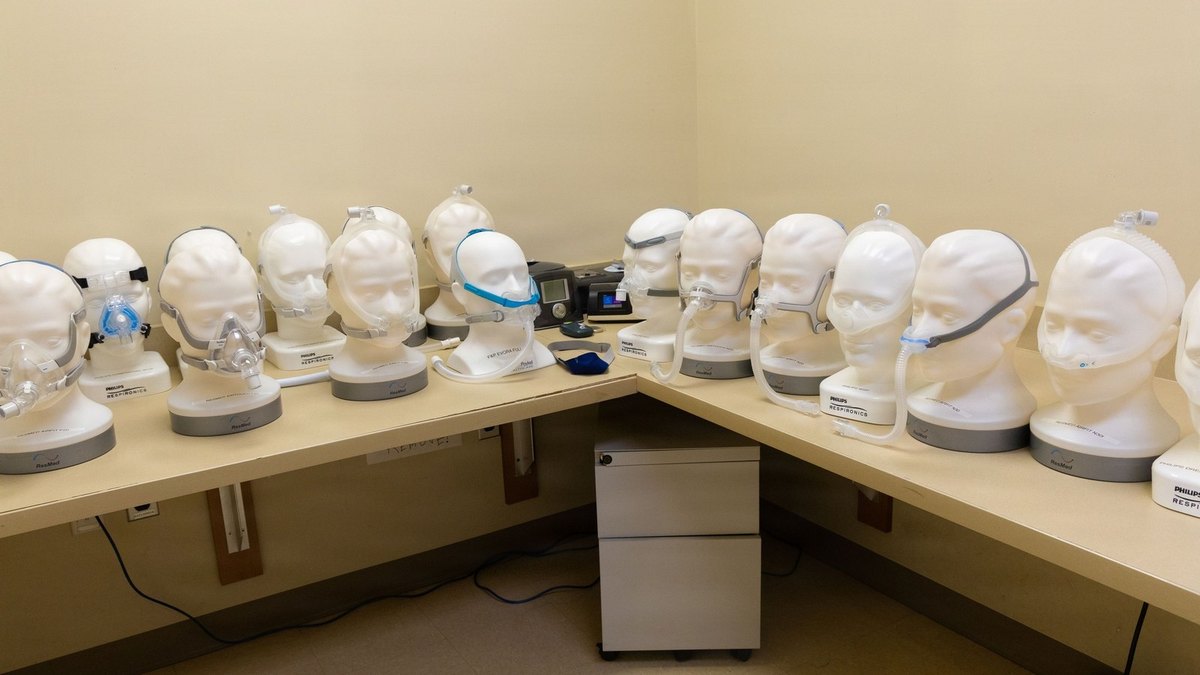
Image: Christopher Smith, Walter Reed National Military Medical Center, via DVIDS (public domain).
All guidance checked Saturday, Nov 14, 2026, 1:00 AM ET.