
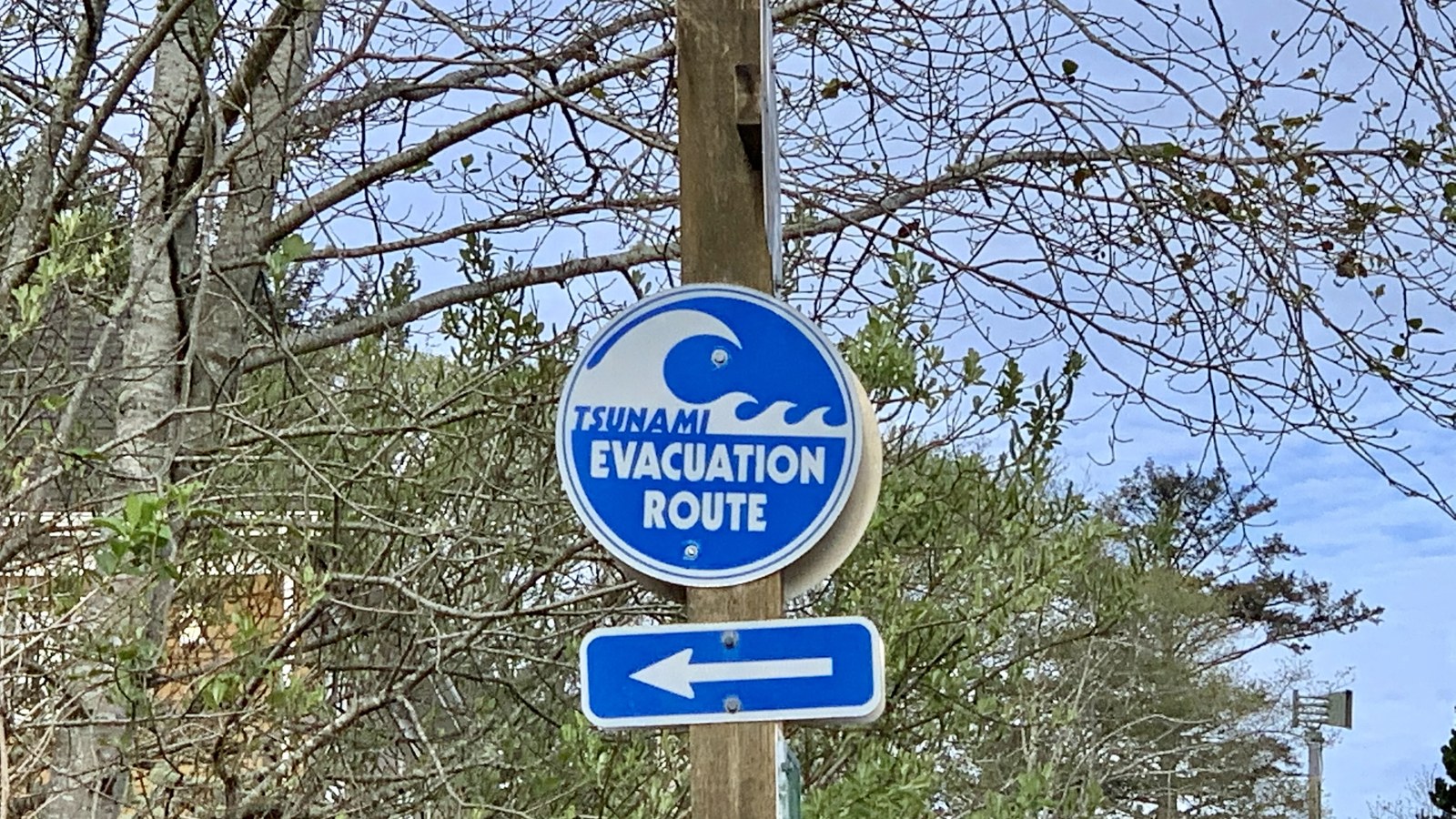
A tsunami warning means a dangerous tsunami is expected or already happening, and you should move to high ground or inland now. A tsunami watch means a distant earthquake has happened and a tsunami is possible, so stay tuned and be ready to act. Those are two of the four U.S. tsunami alert levels set by NOAA's National Weather Service, which runs the two U.S. tsunami warning centers. The other two are the advisory, for dangerous currents near the water, and the information statement, which in most cases means there is no threat.
As of 1:05 PM ET, Monday, Oct 26, 2026, tsunami.gov showed no tsunami warning, advisory, watch or threat in effect. The latest message was a Pacific Tsunami Warning Center information statement for a deep earthquake in Japan's Bonin Islands region on Oct 24 (ET).
Quick answers
- What is the difference between a tsunami warning and a watch? A warning means a dangerous tsunami is expected or occurring, and a watch means one is possible, the National Weather Service says.
- How many tsunami alert levels are there? Four. They are warning, advisory, watch and information statement.
- What should I do in a tsunami warning? Follow local officials and move to high ground or inland, away from the water.
- What is a tsunami advisory? It means strong currents or waves are dangerous to people in or very near the water, so stay out of the water and away from beaches.
- What is a tsunami information statement? It means an earthquake happened but there is no threat, or it was very far away and the threat has not yet been determined.
- Why didn't the earthquake cause a tsunami? Most quakes are too small, too deep or under land. The USGS says a tsunami needs a shallow quake under the sea that moves the seafloor.
- Who issues US tsunami alerts? NOAA's National and Pacific Tsunami Warning Centers, which post them at tsunami.gov.
The four tsunami alert levels
The U.S. uses four levels, from most to least serious: warning, advisory, watch and information statement.
The National Weather Service says the tsunami warning centers send these messages to emergency managers, local officials and the public after a possible tsunami-making event, and that for U.S. and Canadian coasts the messages include one of these alerts. Each level carries a short instruction in the agency's own words:
- Tsunami Warning, "Take Action." "A tsunami that may cause widespread flooding is expected or occurring." Dangerous coastal flooding and powerful currents may continue for several hours or days after the first wave.
- Tsunami Advisory, "Take Action." A tsunami with "strong currents or waves dangerous to those in or very near the water is expected or occurring." Beach and harbor areas may flood.
- Tsunami Watch, "Be Prepared." "A distant earthquake has occurred. A tsunami is possible."
- Tsunami Information Statement, "Relax." "An earthquake has occurred, but there is no threat or it was very far away and the threat has not been determined. In most cases, there is no threat of a destructive tsunami."
Any of these can change. The weather service says warnings, advisories and watches may be updated or cancelled, and advisories, watches and information statements may be upgraded if the threat turns out to be greater.
Warning vs watch vs advisory
The difference is how sure the centers are and how far the water is expected to reach.
On tsunami.gov's message definitions page, the warning centers spell it out. A warning is issued when a tsunami that could cause widespread flooding inland is "imminent, expected, or occurring," and it tells officials to act for the whole tsunami hazard zone, which may mean evacuating low-lying coasts. An advisory covers the same timing but a smaller threat: strong currents and dangerous waves, with "significant inundation" not expected, so officials may close beaches and clear harbors and marinas. A watch is issued "when a tsunami may later impact the watch area." The hazard is listed as "not yet known," and the watch may be upgraded to a warning or advisory, or cancelled.
Put simply, a warning and an advisory say the water is coming and differ in how far it will reach. A watch says the centers are still working it out. A cancellation comes only after water level readings confirm that a destructive tsunami will not hit, or that it has faded.
Outside the U.S. and Canada, the Pacific Tsunami Warning Center sends a different kind of message. Its international threat messages and information statements go to national authorities, who decide which alerts to issue for their own coasts, so those messages carry no warning or watch label.
What to do at each level
The weather service attaches one action to each level.
- Warning: follow instructions from local officials. Evacuation is recommended. Move to high ground or inland, away from the water.
- Advisory: stay out of the water and away from beaches and waterways, and follow local officials.
- Watch: stay tuned for more information and be prepared to act.
- Information statement: no action is suggested.
There is one more rule, and it outranks all four. The weather service says there may not always be time for an official warning. If you are at the coast and feel a strong or long earthquake, see a sudden rise or fall of the ocean, or hear a loud roar from the sea, "a tsunami may follow. This is your warning." It says to move to a safe place and not wait for official instructions.
Why most earthquakes make no tsunami
Size alone does not make a tsunami. The quake has to be shallow and under the sea, and it has to move the seafloor.
The U.S. Geological Survey says that "the earthquake must be a shallow marine event that displaces the seafloor," and that thrust earthquakes are "far more likely to generate tsunamis" than strike-slip quakes, where the ground slides sideways. It gives general guidelines, based on history and on the Pacific Tsunami Warning Center's procedures:
- Below magnitude 6.5: "very unlikely to trigger a tsunami."
- Magnitude 6.5 to 7.5: these "do not usually produce destructive tsunamis," though small sea level changes may be seen near the epicenter, and damaging tsunamis are rare but have happened through landslides or underwater slumps.
- Magnitude 7.6 to 7.8: these "might produce destructive tsunamis, especially near the epicenter."
- Magnitude 7.9 and greater: "destructive local tsunamis are possible near the epicenter," with significant sea level changes and damage possible in a broader region.
Depth is the reason two recent Pacific quakes made no wave. On Oct 16 an M6.9 struck 135 km beneath Kamchatka, and the Pacific Tsunami Warning Center found no tsunami threat, as we noted at the time. That was the same quake that set off Japan's false M9.9 early warning. On Oct 24 at 10:09 PM ET, a quake in the Bonin Islands region south of Japan, M6.5 by the USGS and about 492 km deep, drew a Pacific Tsunami Warning Center information statement that said "there is no tsunami threat" to Guam and the Northern Mariana Islands.
Where to get official alerts
Tsunami alerts come from two NOAA centers and reach you through many channels.
The National Tsunami Warning Center in Palmer, Alaska, and the Pacific Tsunami Warning Center in Honolulu post every message at tsunami.gov, with a live map of alerts and recent earthquakes. The weather service says warnings also go out through local radio and television, marine radio, Wireless Emergency Alerts on phones, NOAA Weather Radio, outdoor sirens, local officials, text alerts and phone calls. Local officials may have more detailed instructions for your stretch of coast, and their word comes first.
On this site, our earthquakes page ties every quake note to its USGS event page and links tsunami.gov, the monitor shows quakes as they come in, and the methodology page explains which agencies we rely on. When a tsunami warning center speaks, its word outranks ours.
Sources
- National Weather Service, Understanding Tsunami Alerts
- U.S. Tsunami Warning Centers (NOAA/NWS), Tsunami Message Definitions and tsunami.gov home page, checked Oct 26, 2026
- Pacific Tsunami Warning Center, Tsunami Information Statement Number 1 for Guam and CNMI, Bonin Islands region, issued 0226 UTC Oct 25, 2026
- U.S. Geological Survey, What is it about an earthquake that causes a tsunami?
- U.S. Geological Survey, M6.5 Bonin Islands, Japan region event page, origin 0209 UTC Oct 25, 2026
- U.S. Geological Survey, Tsunami Evacuation Route Sign, photo by Annie Scott
Sources: National Weather Service; U.S. Tsunami Warning Centers (National Tsunami Warning Center and Pacific Tsunami Warning Center) at tsunami.gov; U.S. Geological Survey. Hero image: Annie Scott, U.S. Geological Survey, public domain, cropped to 16:9. Status checked 12:45 PM ET, October 26, 2026.