
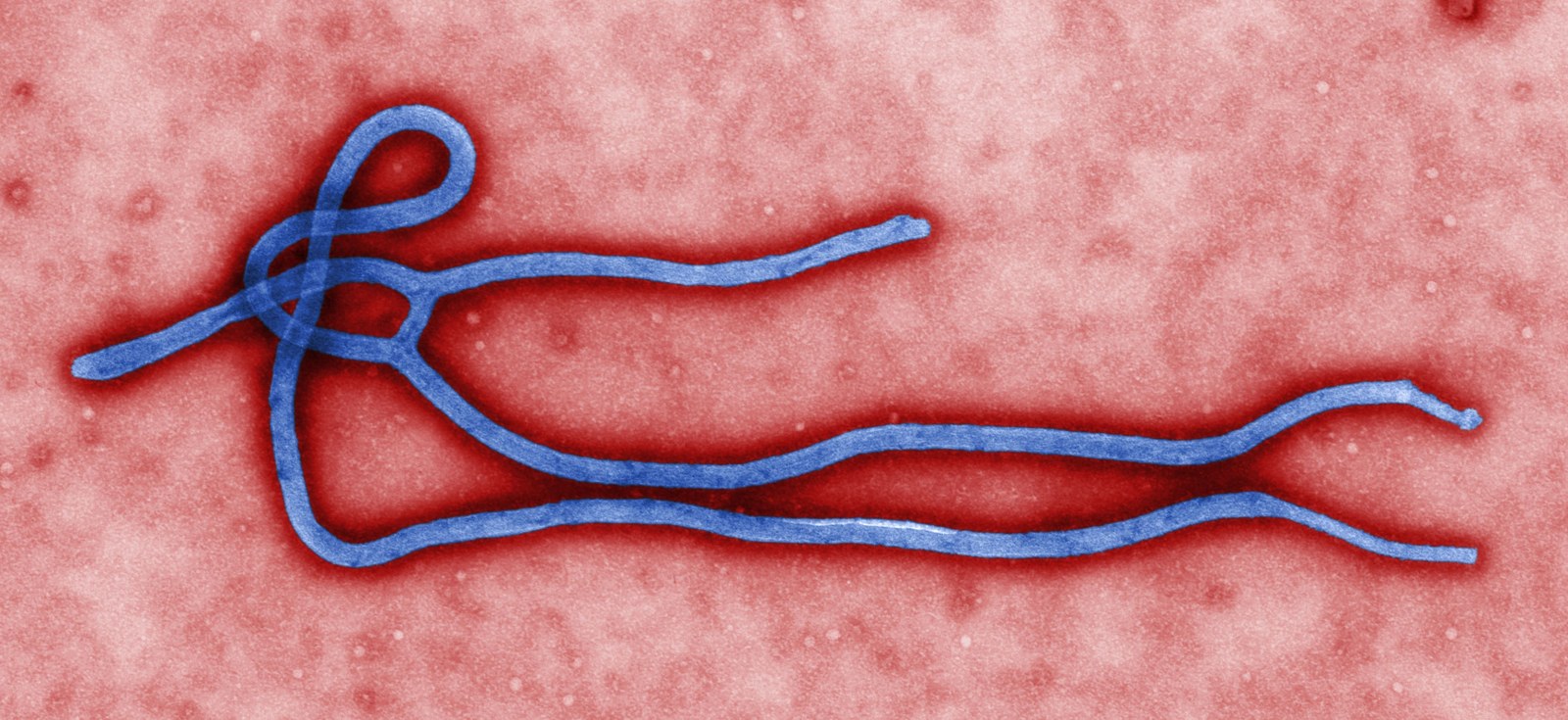

Figures as of Oct 11, 2026, from WHO's Africa office (Weekly External Situation Report 22), with Congo's own count through Oct 14 as reported by the European Centre for Disease Prevention and Control, and Kenya's count from its Ministry of Health on Oct 17. Page checked Saturday, Oct 17, 2026, at 2:27 PM ET.
Congo's Ebola outbreak is now the second largest on record. It is caused by Bundibugyo virus, a rarer member of the Ebola family, and it has reached Kenya. Here is where things stand, in plain words, and what is still unknown.
Quick answers
- How many cases and deaths are there in Congo now? WHO's Africa office counts 9,066 confirmed cases and 4,381 confirmed deaths as of Oct 11; Congo's newer daily figures, reported by ECDC, reach 9,277 cases and 4,478 deaths through Oct 14.
- Why is Ituri the center? The outbreak was declared there on May 15, and Ituri still holds about three in four confirmed cases, in a province where armed conflict and displacement make tracing the sick very hard.
- Did Ebola reach Kenya, and how? Yes: a Kenyan man who fell ill in Congo travelled by road to Kampala, flew into Nairobi on Oct 3 and died. On Oct 17, Kenya's Ministry of Health counted seven confirmed cases, including that one death; the six later patients, relatives and health workers who cared for him, were all already in quarantine.
- Is there a vaccine for Bundibugyo? No: WHO says there is no licensed vaccine for Bundibugyo virus disease, and trials are testing candidates and the existing Ervebo vaccine.
- Is it spreading to other countries? Kenya is the fourth country with a case linked to this outbreak, after Uganda and France, where the events were brought under control; no cases have been confirmed in South Sudan or the Central African Republic.
- Should travelers worry? For most travelers, no; CDC advises against all travel to Ituri and North Kivu, and anyone who was in Congo in the past 21 days cannot board a commercial flight to the United States.
The latest count (WHO)
WHO's Africa regional office says Congo had recorded 9,066 confirmed cases of Bundibugyo virus disease, including 4,381 confirmed deaths, as of Oct 11, 2026. That is a crude fatality ratio of 48.3%, meaning close to half of confirmed patients have died. The cases come from 65 health zones in seven of Congo's 26 provinces.
The European Centre for Disease Prevention and Control, which tracks Congo's daily reports, put the count at 9,277 confirmed cases and 4,478 deaths through Oct 14, with 2,486 people recovered and 924 patients in isolation. On Oct 14 alone, Congo reported 65 new confirmed cases and 37 deaths.
WHO's latest Disease Outbreak News, published Oct 8, gave 8,728 cases and 4,205 deaths as of Oct 6. It said that in the three weeks before, most deaths happened in communities rather than in treatment centres: 264 of 372. WHO reads that as a sign that people are reaching care too late.
The trend is not a clean decline. WHO's Africa office describes repeated drops and rebounds, with falling numbers in older Ituri hot spots offset by new or continuing spread in North Kivu and Haut-Uélé. ECDC also notes media reports, citing officials, of two cases in Nord-Ubangi, which would make it an eighth province. WHO had not listed that province in its Oct 11 report.
Why Ituri is the epicenter
Ituri, in Congo's far northeast, is where the outbreak was declared on May 15, 2026. It has carried most of the weight ever since. In early September, WHO's Director-General said Ituri held 85% of cases and 88% of deaths. By Oct 11, WHO's Africa office put Ituri's share at 73.8% of confirmed cases: still most of the outbreak, though a shrinking share. ECDC counts 6,806 cases and 3,148 deaths in Ituri, reported from 28 of its 36 health zones.
The reasons are as much about the place as the virus. Ituri has armed groups, a large UN peacekeeping presence and many displaced families. On Oct 1, a UN official said soldiers searching for weapons burned the Kigonze camp near Bunia, which housed an Ebola transit centre, and 19,000 people fled. Africa CDC has warned that insecurity and community resistance in hot spots can make the case count look lower than it is. When people move, hide illness or cannot reach a clinic, the virus is harder to follow.
How Ebola reached Kenya
According to Kenya's Ministry of Health, as summarized by WHO, the first patient was a Kenyan adult who lived in Congo. He fell ill about a month before, was treated in several hospitals there, travelled by road to Kampala, Uganda, and flew into Nairobi on Oct 3. A relative took him straight to Nairobi Hospital, where he was isolated. A sample taken on Oct 5 tested positive for Bundibugyo virus at two national laboratories the same day. He received supportive care and died.
The sources give different dates for his death. WHO's Oct 8 Disease Outbreak News says he died on Oct 5, and Kenya's Health Cabinet Secretary Aden Duale has also given Oct 5. The Kenya Ministry of Health statements of Oct 6 and Oct 7 that Doom Signals reported gave Oct 6. Both dates are in the official record.
On Oct 14, Kenya's Ministry of Health confirmed a second case: a 39-year-old man, a close family member of the first patient. He was already in quarantine and checked daily when he developed fever, fatigue and joint pains on Oct 13. He was isolated, and two laboratories confirmed Bundibugyo virus. On Oct 16 a third case followed, a 65-year-old woman, also a close family member who was already in quarantine, according to the ministry and WHO's Africa office.
On Oct 17, the ministry confirmed four more cases, bringing Kenya's total to seven, including one death. One is a close male relative of the first patient, in quarantine since Oct 6. The other three are health workers, two men and a woman aged 29, 35 and 32, who cared for the first patient in hospital on Oct 3 and 4 and had been in quarantine since Oct 9. All four developed fever, were isolated at once and tested positive at the National Virology Reference Laboratory and the KEMRI laboratory. The ministry says six patients are receiving supportive care, and that the second and third patients are stable.
The ministry says there is no evidence of community transmission and that the risk to the general public remains low. Of 130 contacts listed, 128 (98.5%) have been traced and are in quarantine, and work continues to trace the last two. It warns that more cases among quarantined contacts are possible until their 21 days of monitoring end.
Is there a vaccine or treatment?
There is no licensed vaccine for Bundibugyo virus disease, WHO says. The well-known Ebola vaccine, Ervebo, is licensed for a different species, Zaire ebolavirus. Animal data suggest it might offer some protection against Bundibugyo, but WHO says there is not enough evidence yet to know whether it works in people.
In August, the global stockpile released 70,000 Ervebo doses to Congo: 20,000 for a Phase 3 trial to measure whether it protects against Bundibugyo, and 50,000 for frontline and health workers. Two vaccines designed for Bundibugyo, from Moderna and from the University of Oxford with the Serum Institute of India, are in early safety trials, according to CEPI, which funds vaccine research.
Care today means supportive treatment: fluids, oxygen and treating symptoms early. WHO has said oxygen is unavailable or unreliable in many facilities in Congo, and that many patients still die at home.
Is it spreading to other countries?
WHO's Africa office counts Kenya as the fourth country affected by this outbreak. Uganda reported 20 cases in May and June, and WHO declared Uganda's outbreak over on Aug 25. France reported an imported case in June. Separately, infected health and aid workers have been flown to Germany and, on Oct 1, to the Netherlands for treatment.
No cases have been confirmed in South Sudan or the Central African Republic, according to the ReliefWeb situation report of Oct 13. That report says the risk of cross-border spread stays high because of porous borders and people on the move. WHO has kept the outbreak listed as a public health emergency of international concern since May.
What it means for travelers
CDC asks travelers to avoid all travel to Ituri and North Kivu provinces unless they are going for humanitarian aid or emergency response. It advises avoiding nonessential travel to Haut-Uélé and Tshopo, and taking enhanced precautions in the rest of Congo and in Uganda.
The United States has temporarily restricted entry: anyone, including Americans, who has been in Congo within 21 days of their flight will not be allowed to board a commercial flight to the US, according to CDC.
When this page was checked, CDC's Kenya page carried no Ebola travel notice. All seven of Kenya's cases are the first patient or people who were in close contact with him, and its health ministry reports no community spread. For a trip to Kenya, the usual advice stands, though that can change.
For anyone who has been in an affected area, CDC's advice is to watch for fever, headache, muscle pain, weakness, vomiting, diarrhea or unexplained bleeding for 21 days. If symptoms appear, stay apart from others and call a health provider before you go in.
How Doom Signals tracks this outbreak
This page is updated in place when WHO publishes a new count. Each update changes the "Figures as of" line at the top. The daily notes behind it are on the outbreaks page, including WHO's Disease Outbreak News 618 count of 7,890 cases, the Oct 1 note when deaths passed 4,000, and the Oct 7 note on Kenya's first case.
We use WHO as the headline count. We use Congo's daily figures and ECDC's summary for newer numbers. We report each country's health ministry in its own words. When two official sources disagree, we print both.
Sources
- WHO Africa, Weekly External Situation Report 22, data as of Oct 11, 2026 (via ReliefWeb)
- WHO Africa, Weekly External Situation Report 21, data as of Oct 4, 2026
- WHO, Disease Outbreak News 2026-DON619, Oct 8, 2026
- ECDC, Ebola disease outbreak in the Democratic Republic of the Congo, page updated Oct 16, 2026 (data to Oct 14)
- ReliefWeb, Ebola Outbreak, DRC and Region, Situation Report 14, Oct 13, 2026
- Kenya Ministry of Health, press release "New cases detected in two quarantine sites," Oct 17, 2026, signed by Director General Patrick Amoth, and Ebola response update, Oct 17, 2026
- WHO Africa, WHO supports Kenya's Ebola response as third case is found early in quarantine, Oct 16, 2026
- Kenya Ministry of Health, Ebola page; statement of Oct 14, 2026, as reported by The Standard and Citizen Digital
- WHO, Ebola vaccines: questions and answers
- WHO, Allocation of Ebola vaccines to the DRC, Aug 20, 2026
- CEPI, Phase 2/3 Bundibugyo vaccine trial
- CDC, Level 4 travel notice: Ituri and Nord-Kivu and Level 2 notice: DRC and Uganda
- CDC, Travelers' Health: Democratic Republic of the Congo and Kenya
- Hero image: CDC Public Health Image Library 10816, Cynthia Goldsmith, public domain