
peer-reviewed primary (Science) · press triangulation (CNN / SciAm / DongA) · USGS historical event cross-check
Science: North Korea’s last nuclear test still wakes Mount Mantap faults
A Science paper published September 17 reports that repeated underground nuclear tests at Punggye-ri reactivated nearby intraplate faults: researchers catalogued about 1,399 previously unrecognized local earthquakes around Mount Mantap from 2008–2025, with rate and seismic energy continuing to rise after the 2017 blast instead of fading — and warn that years-later seismicity can blur CTBT-style attribution between explosions and tectonic quakes.
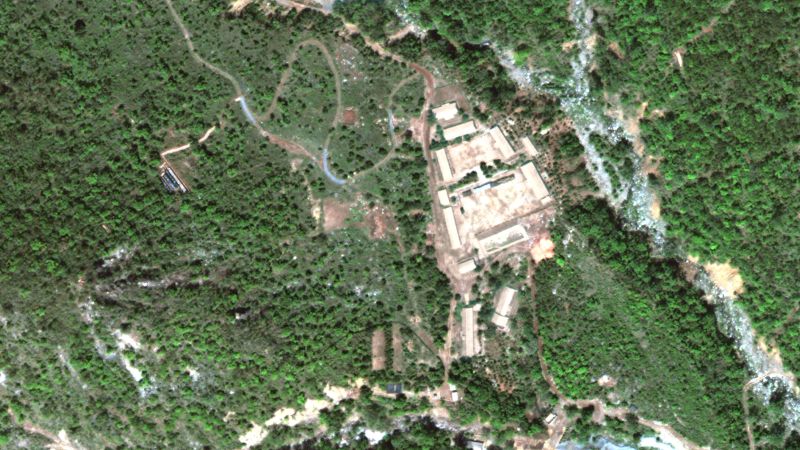
Key facts
- Primary
- Fan, Xingli; Kim, Kwang-Hee; et al. — Science, published 17 September 2026. DOI: 10.1126/science.adx5917. Joint team: Chengdu University of Technology (CDUT) and Pusan National University (DongA Science / CNN).
- Catalog
- Continuous seismic records from stations in China and South Korea, 2008–2025 → 1,399 local earthquakes around Mount Mantap, far above prior catalogs (DongA / CNN / SciAm).
- 2017 trigger stamp
- Persistent activity began around Mantap on September 23, 2017 — about three weeks after the last known nuclear test (September 3, 2017). Unlike typical post-explosion fade, occurrence rate and seismic energy release continued to rise through 2025 (DongA).
- Event sizes
- Mostly about magnitude 2–3, shallow (CNN quoting Kim). Not a claim of new large tectonic disasters.
- Structure
- After relocating 955 hypocenters, events clustered along two roughly NNW parallel fault structures extending from the test site — one an extension of a known fault, one not on prior maps; organized fault-scale seismicity 10–30 km from the site (DongA).
- Tectonic setting
- Stable continental crust; major catalogs report no crustal earthquakes within 50 km of the site from 1904 until the 2017 test (DongA).
- 2017 blast reference (USGS)
- USGS event us2000aert — M 6.3, type nuclear explosion, 21 km ENE of Sŏngjibaegam, North Korea. Yield estimates in press: ~100–250 kt (DongA / SciAm) or ~160 kt (CNN) — press/author estimates, not a new Desk gauge.
- No new test claim
- Kim / team — no evidence further nuclear tests since 2017; no access to the site or DPRK seismic data (CNN).
- Monitoring implication
- Seismicity years after detonation “may complicate attribution and blur distinctions between explosion-related and tectonic events” — relevant to long-term CTBT / former-test-site monitoring (SciAm / DongA).
Seismicity years after detonation may complicate attribution and blur distinctions between explosion-related and tectonic events.
Authors’ monitoring implication, via Scientific American / DongA Science coverage of Science DOI 10.1126/science.adx5917
Note
On September 17, Science published a study of nearly two decades of seismic records around North Korea’s Punggye-ri test site. Researchers in South Korea and China report about 1,399 local earthquakes near Mount Mantap from 2008 through 2025 — activity that stayed sparse until after the September 3, 2017 underground test, then rose for years instead of fading. Most events were small (about magnitude 2–3) and shallow; relocated hypocenters line up on two fault structures reaching tens of kilometers from the test site. The U.S. Geological Survey still lists that 2017 event as a magnitude-6.3 nuclear explosion. The authors say they see no evidence of further nuclear tests since 2017, and they warn that years-later seismicity can blur the line between explosion-related and tectonic signals for long-term monitoring.
Attribution: Science article DOI 10.1126/science.adx5917 (Fan, Kim, et al.; published 2026-09-17). Press triangulation: CNN Science (Katie Hunt, Sep 17), Scientific American (Tom Metcalfe, Sep 17), DongA Science (Byeongku Lee, Sep 18 KST). Historical blast: USGS us2000aert. Science.org full HTML not opened from Desk box (Cloudflare); FACT numbers limited to those consistently reported across the triangulating outlets + DOI stamp.
Why it matters
The mountain did not go quiet. A brand-new Science ledger says the 2017 blast left faults still slipping years later — small quakes, rising count, rising energy — on ground that was nearly mute for a century. Mom-readable dread is not “North Korea just tested again” (the paper does not say that). It is a tired nuclear mountain that keeps twitching, and official monitors who must now tell explosion leftovers apart from ordinary earthquakes. That is a verification problem with a long memory.
Sources
Primary + secondary attribution as listed. Live values go to the HUD / source product.