
official data (NASA Earth Observatory / Landsat 8 OLI) · elevation attributed to U.S. Bureau of Reclamation via NASA
NASA: Lake Powell at record-low water — Landsat shows the bathtub ring
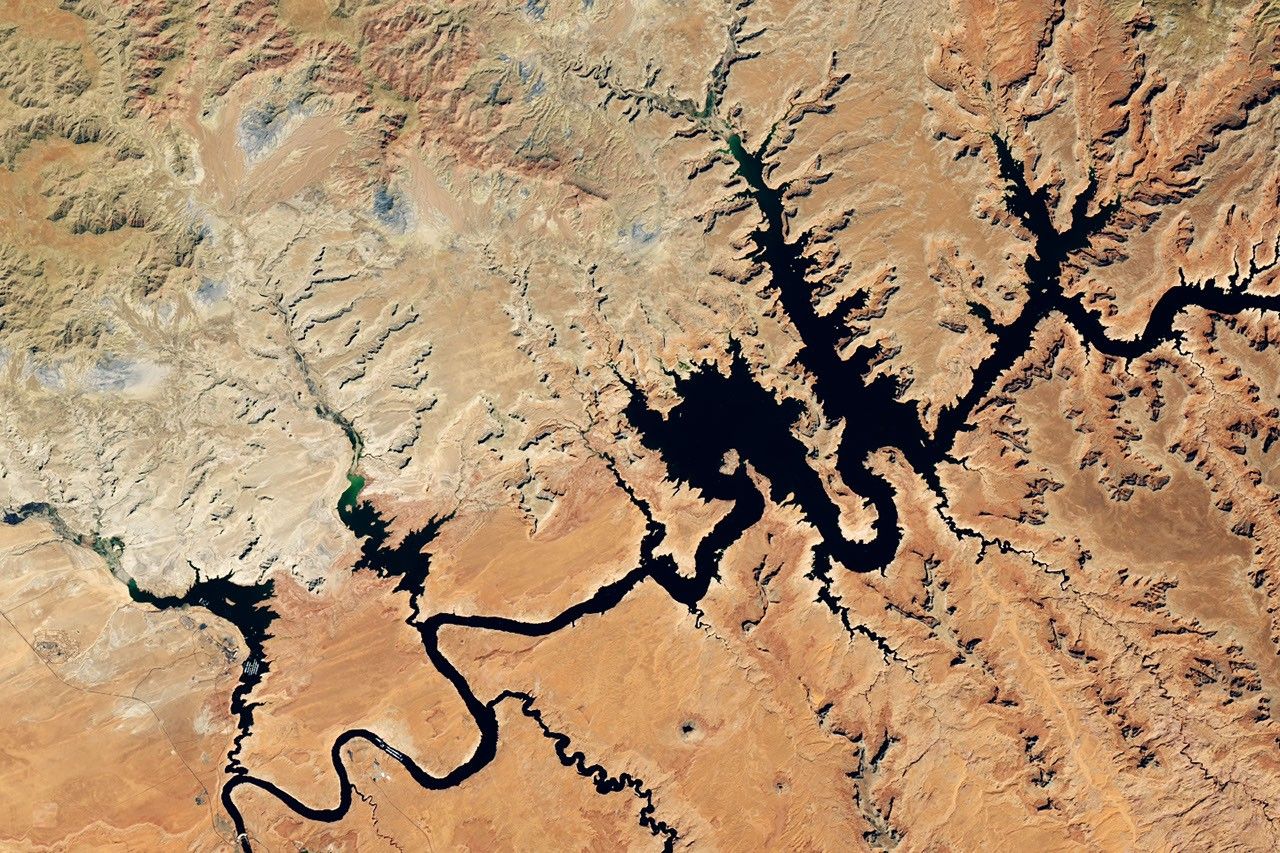
NASA’s Earth Observatory Image of the Day for September 18 shows Lake Powell at a record-low surface elevation of 3,517.24 feet on September 10, 2026 — below the prior USBR record of 3,519.92 feet (April 13, 2023) — after a Upper Colorado snow drought and unusual warmth left the West’s second-largest reservoir looking like a thin river in the canyon.
Key facts
- Product
- NASA Earth Observatory Image of the Day, dated September 18, 2026. Story by Lindsey Doermann; images by Lauren Dauphin using Landsat data (USGS) and lake elevation data (USBR).
- Imagery
- Landsat 8 OLI pair — September 1, 2017 (high for the past decade) vs September 10, 2026 (record-low appearance) of the reach just above Glen Canyon Dam.
- Elevation (USBR via NASA)
- 3,517.24 ft on September 10, 2026. Prior record low: 3,519.92 ft on April 13, 2023. First crossed below prior record: August 15, 2026, then continued declining into early September.
- Hydropower floor
- Remained above minimum power pool 3,490 ft, below which Glen Canyon turbines cannot generate effectively (NASA citing the operational threshold).
- Drivers (NASA)
- Meager Upper Colorado mountain snowpack winter 2025–2026 (snow drought) + stretches of record warmth → weak snowmelt recharge; 21st-century Southwest megadrought context.
- Downstream twin
- Lake Mead also hit record-low levels in August 2026 (NASA; not a separate card here).
- System stakes
- Colorado River system supplies water/power to >40 million people and water to some 5 million acres of farmland (NASA).
- USBR actions (NASA citing April 2026)
- Releases from Flaming Gorge into Powell; reduced Powell→Mead releases; canceled April controlled flood; skipped August cool-mix release — framed as moves to keep Powell above hydropower risk.
The bathtub ring is the meter.
Desk reading of NASA Earth Observatory Image of the Day (Sep 18, 2026)
Note
NASA’s Earth Observatory on September 18 published a Landsat before-and-after of Lake Powell above Glen Canyon Dam: a relatively full September 2017 scene beside a September 10, 2026 scene at a record-low water level of 3,517.24 feet. That sits below the previous Bureau of Reclamation record of 3,519.92 feet from April 2023. NASA says the reservoir first broke the old record on August 15 and kept falling into early September after a weak Upper Colorado snowpack and unusual warmth. The lake remained above the 3,490-foot minimum power pool. Lake Mead, downstream, also reached record lows in August 2026. Reclamation had already begun emergency-style moves in April — releasing water from Flaming Gorge into Powell and cutting Powell releases toward Mead — to keep hydropower offline risk at bay.
Attribution: NASA Earth Observatory — “Lake Powell Drops to Record-Low Levels” (2026-09-18). Data: USGS Landsat 8 OLI; lake elevations U.S. Bureau of Reclamation as cited by NASA. Live later elevations → USBR / live HUD — Desk does not invent a post-Sep-10 gauge here.
Why it matters
The bathtub ring is the meter. NASA’s official before/after pair makes the second-biggest Western reservoir look like a canyon river at a new low-water stamp — still above the hydropower dead line, but only after Reclamation already moved water and cut releases to defend that line. Mom-readable dread is not a cartoon empty lake; it is the storage buffer for tens of millions of people thinning on the satellite record.
Sources
Primary + secondary attribution as listed. Live values go to the HUD / source product.